Archive for December, 2008

Texas Energy Policy, Inhibiting Green Energy!

Wednesday, December 31st, 2008

Related Article: Michigan Energy Policy, Needs Change In Leadership?

Real Quick, What is net metering?
“Net Metering” is the most critical public policy and state regulated rules that govern YOUR PERSONAL ENERGY RIGHTS, FREEDOM. Through Net Metering, energy consumed and produced at a home or business that has a home wind turbine or solar system is metered and credited. Under net metering, excess electricity produced by the wind turbine will spin the existing home or business electricity meter backwards, effectively banking the electricity until it is needed by the customer. This provides the customer with full retail value for all the electricity produced.

If you can’t afford a windmill or solar system for your home, we still need you to get involved, right here. This article will point out how your state, Texas has serious limits on your personal energy rights. That’s right, people in states like Colorado, New Jersey, etc. have far more rights and freedom for personal energy than you. Please make these same points to your elected officials, Governor, State Representatives, Local newspapers, and Utility Commissions. Join me in calling on US Congress and US Senate to legislate a standardized Net Metering Policy, nationally. We need National Standards for Net Metering Policy to support wind and solar progress, not stifle it. Having these states all do their own thing is limiting many Americans from their personal energy rights. But first, for now, we need to shine the light on these state policies and get reforms in our own back yard.

Here’s a quick look at Texas Net Metering Rules. I’m going to compare them to other states, states where the government Utility Commissions and Politicians are on the side of taxpayers and not sold out to Fat Cat Utility companies. If the Texas taxpayers don’t understand what needs to happen, and make noise to public officials, then the Utility Companies are the ones most influencing policy, not the consumers. Thus we will be stuck with these limits on green energy for homeowners and businesses.

I’ll use Colorado and New Jersey in some real basic policy comparisons so you can easily see where you, in Texas, are getting hosed by Big Utility friendly policy.

home turbine home wind turbine home turbines turbines for home turbines for homes turbines homes wind turbines for homes home made turbine turbines for the home wind turbine for home turbine for home home built turbine home built turbines home turbine power home made turbines turbines home use wind turbines home use home gas turbine home wind turbine generators turbine

Texas Limit on System Size: 100 kW for qualifying facilities; 50 kW for renewables (see summary)
OK, that is enough for most but not all residences, depending on wind resources. Any very large residence, normal business, or a consumer in a lower wind area could need more power than that. What does that mean? Well, it means that by your states Utility Commission rules, they and their big Utilities they are supposed to “regulate” have it fixed on the taxpayer. As a taxpayer, many larger residences and most businesses will have to go Off-Grid to generate ALL their own power. Not good enough. No freedom in that, no justice. WHO is most likely to afford to invest in green energy? The largest residences and some stable businesses that can afford it… Doh. Sorry, your elected officials and their corrupt Utility “Regulators” have basicall put a limit in there for that…

Compare To, New Jersey Limit on System Size: 2MW, 2,000,000 watts
OK, meaning a person in New Jersey has dramatically more rights to personal energy than a taxpayer in Texas. That’s enough to power 2 WalMart stores! To be mathematic, a New Jersey taxpayer has 20 times the personal energy rights than a taxpayer in Texas. That sucks for Texas taxpayers, but maybe not so bad for the Big Utilities and the government “regulators” and politicians that support these limits on taxpayer rights to personal energy. They keep that ceiling over your head to hold back green energy, or keep it for themselves. We all have wind, sun, we should all have freedom to make OUR OWN electricity from it.

Texas Limit on Overall Enrollment: None
OK, this is great, same as leading states like Colorado. In many states like Michigan, the fat cats have it capped at 0.5% of grid capacity, then they don’t have to allow anyone else… It’s too successful at 0.5% and they want it stopped.. Nice.

Texas Treatment of Net Excess: Purchased by utility for a given billing period at avoided-cost rate.
OK, that’s a rip off. That means they can pay you whatever their idea is of their “avoided cost”. Bogus. And they can take your excess, pay you a fraction for your power generated, sell it to your neighbors an retail rate. Your Texas Net Metering Policy is getting an “F” for this bad policy. This should specifically be a 1 to 1 retail rate, what they charge is what they credit/pay otherwise they are taking advantage.

Colorado, Treatment of Net Excess: Credited to customer’s next bill; IOUs: utility pays customer at end of calendar year for excess kWh credits at the average hourly incremental cost for that year. Co-ops and Munis: annual reconciliation at a rate deemed appropriate by the utility. The annual period is undefined.

Texas Utilities Involved: Applies only to all integrated IOUs that have not unbundled in accordance with Public Utility Regulatory Act § 39.05; does not apply to municipal utilities, river authorities and electric cooperatives
Oh Boy, In Texas, some of the highest cost power is in munis, co-ops, and river authorities. These rules are crafted to allow many over-priced Utility Companies to be outside the rules. That stinks too. We need all inclusive wording here no matter who’s contriuting to who’s campaign, or paying gifts, bribes, whatever goes on there.

Colorado Utilities Involved: All IOUs and co-ops; munis with more than 5,000 customers
OK, Here, Colorado basically doesn’t let anyone out of Net Metering Rules, that’s really good. In Texas, some of the highest cost power is in munis and co-ops. Texas needs to step up to other states level of energy freedom here and “regulate”, stop protecting their buddies.

*HB 3693, passed in May 2007 and effective September 2007, appears to make significant modifications to Texas net metering and interconnection policy. As of April 2008, the Electric Reliability Council of Texas (ERCOT) and the Public Utility Commission of Texas (PUCT) were still in the process of implementing this legislation. Although implementation is ongoing, an April 2008 PUCT order clarifies that net metering will not be available in areas of Texas in which retail electric competition has been introduced. The impact of HB 3693 on net metering availability in non-competitive areas of Texas is still being determined. PUCT documents on this subject are available under Docket 34890 while ERCOT is addressing issues for small renewable generators (<50 kW) through its Profiling Working Group.

As we speak there are loopholes and complication being piled on in favor of Fat Cat Utilities by bureaucrats and politicians beholden to them. This PUCT, ERCOT, and such is a diversion allowing multiple rules in play on your rights… YOUR VOICE IS NEEDED.

Also, forward these links to your local texas papers and write letters to the editor, send to local news for exposure and attention.

Contact: Governor Rick Perry
Office of the Governor
P.O. Box 12428
Austin, Texas 78711-2428
Citizen’s Opinion Hotline: (800) 252-9600
FAX: (512) 463-1849
FAX:(517) 335-6863
http://www.governor.state.tx.us/contact/
http://governor.state.tx.us/about/

Contact:
Public Information – PUCT
Public Utility Commission of Texas

7800 Shoal Creek Boulevard, #400N
Austin, TX 78757
Phone: (512) 936-7000
E-Mail: customer@puc.state.tx.us

http://www.puc.state.tx.us

Contact: Texas State Representatives:
Leadership in the House is headed by the Speaker of the House, who makes committee appointments and designates which committee(s) each Representative will serve on.

Here you can find a listing all Texas Representatives and their contact information, including office phone numbers and e-mail addresses. If you use this by Zip Code, it will give you your US Senators as well.
Find Texas State Representatives By Zip

For Wind Turbine Sales or Dealer Inquiries turbine@windenergy7.com.

If you are interested in starting a wind project for your residence or acreage, contact us. To Buy a Wind Turbine or Become a Dealer, Please fill out our Contact Form. The system will automatically send you some additional info.

Michigan Energy Policy, Needs Change In Leadership?

Thursday, December 25th, 2008

Real Quick, What is net metering?
“Net Metering” is the most critical public policy and state regulated rules that govern YOUR PERSONAL ENERGY RIGHTS, FREEDOM. Through Net Metering, energy consumed and produced at a home or business that has a home wind turbine or solar system is metered and credited. Under net metering, excess electricity produced by the wind turbine will spin the existing home or business electricity meter backwards, effectively banking the electricity until it is needed by the customer. This provides the customer with full retail value for all the electricity produced.

So, whether or not you can afford a windmill or solar system for your home, THIS is where you can get involved, right here. I’m going to point out how your state of Michigan has serious limits on your personal energy rights. That’s right, people in states like Colorado, New Jersey, etc. have far more rights and freedom for personal energy than you. I’ll keep it short, but you can make these same points to your elected officials, Governor, State Representatives, Local newspapers, and Utility Commissions. Further, you can join me in calling on US Congress and US Senate to legislate a standardized Net Metering Policy, nationally. We need National Standards for Net Metering Policy to support wind and solar progress, not stifle it. Having these states all do their own thing is limiting many Americans from their personal energy rights.

home turbine home wind turbine home turbines turbines for home turbines for homes turbines homes wind turbines for homes home made turbine turbines for the home wind turbine for home turbine for home home built turbine home built turbines home turbine power home made turbines turbines home use wind turbines home use home gas turbine home wind turbine generators turbine

Now, let’s have a quick look at Michigan Net Metering Rules. I’m going to compare them to other states, states where the government Utility Commissions and Politicians are on the side of taxpayers and not sold out to Fat Cat Utility companies. It’s not all about corruption but just as much about YOU. If the Michigan taxpayers don’t understand what needs to happen, and make noise to public officials, then the Utility Companies are the ones most influencing policy, not the consumers.

I’ll use Colorado and New Jersey in some real basic policy comparisons so you can easily see where you, in Michigan, are getting hosed by Big Utility friendly policy and law.

Michigan Limit on System Size: 20 kW which is 20,000 watts.
OK, that is enough for a suburban home with moderate power consumption, depending on wind resources. Any large residence, normal business, or a consumer in a lower wind area could need more power than that. What does that mean? Well, it means that by your states Utility Commission rules, they and their big Utilities they are supposed to “regulate” have it fixed on the taxpayer. As a taxpayer, many larger residences and most businesses will have to go Off-Grid to generate ALL their own power. Not good enough. No freedom in that, no justice.

Compare To, New Jersey Limit on System Size: 2MW, 2,000,000 watts
OK, meaning a person in New Jersey has dramatically more rights to personal energy than a taxpayer in Michigan. That’s enough to power 2 WalMart stores! To be mathematic, a New Jersey taxpayer has 100 times the personal energy rights than a taxpayer in Michigan. That sucks for Michigan taxpayers, but maybe not so bad for the Big Utilities and the government regulators and politicians that support these limits on taxpayer rights to personal energy. They keep that ceiling over your head to hold back green energy, or keep it for themselves. We all have wind, we should all have freedom to make OUR OWN electricity from it.

Michigan Limit on Overall Enrollment: 0.5% of a utility’s peak load from the preceding year.
OK, here again, the Michigan Politicians need to act. The big Utility Companies, Utility Commission, and the fat cat politicians that they are supporting have put a tight ceiling right over the head of those wanting to have their own personal wind generation. 0.5%, is a JOKE. Here again, who do these rules and policies support, not the consumer taxpayer. What this means is that if the Net Metering SUCCEEDS and the power generated exceeds 0.5% then they can and will STOP ALLOWING more net metering permits.

Colorado Limit on Overall Enrollment: None, no limit
OK, here we are again, why should a Michigan homeowner or small business have less rights to enroll for Net Metering. What the hell? What is that bogus 0.5% ceiling where they can just stop allowing people to get Net Metering. 0.5% is a joke, that’s not aggressive at all. What that is is a goal, a goal of your Utility Commission and Big Fat Cat Utilities to hold back the progress of consumer wind and solar for their own personal energy rights. Great for Colorado, Michigan gets an F for that 0.5% and all the responsible parties who decided that need voted out and or straightened out.

Michigan Treatment of Net Excess: Carried over at the power supply (i.e., wholesale) component of the retail rate each billing period; no provision for annual true-up, so rollover may be indefinite.
OK, that’s pretty vague as to value. That means they can pay you whatever their idea is of their “wholesale cost”. Bogus. And they can take your excess without ever settling up the bill to pay you for your power generated by you, used by your neighbors. Again, your Michigan Net Metering Policy is getting an “F” for this bad policy.

Colorado, Treatment of Net Excess: Credited to customer’s next bill; IOUs: utility pays customer at end of calendar year for excess kWh credits at the average hourly incremental cost for that year. Co-ops and Munis: annual reconciliation at a rate deemed appropriate by the utility. The annual period is undefined.

Michigan Utilities Involved: All rate-regulated utilities and alternative electric suppliers.
Oh Boy, In Michigan, some of the highest cost power is in munis and co-ops. These rules are crafted to allow many over-priced Utility Companies to be outside the rules. That stinks too.

Colorado Utilities Involved: All IOUs and co-ops; munis with more than 5,000 customers
OK, Here, Colorado basically doesn’t let anyone out of Net Metering Rules, that’s really good. In Michigan, some of the highest cost power is in munis and co-ops.

*The “modified” net metering described in S.B. 213 contains provisions that are unfavorable to customer generators, and the billing practices do not meet the definition of net metering as it is practiced in most other states. For that reason, only the “true” net metering component of Michigan’s program is described in detail.

Contact: Governor Jennifer M. Granholm
P.O. Box 30013
Lansing, Michigan 48909
PHONE: (517) 373-3400
PHONE: (517) 335-7858 – Constituent Services
FAX:(517) 335-6863

Contact: Julie Baldwin (Net Metering)
Michigan Public Service Commission
Operations & Wholesale Markets Division
P.O. Box 30221
Lansing , MI 48909
Phone: (517) 241-6115
E-Mail: baldwinj2@michigan.gov
http://www.michigan.gov/netmetering

Contact: Michigan State Representatives:
Leadership in the House is headed by the Speaker of the House, currently Andy Dillon, who makes committee appointments and designates which committee(s) each Representative will serve on.
 
Here you can find a listing all 110 Michigan Representatives and their contact information, including office phone numbers and e-mail addresses.
http://house.michigan.gov/find_a_rep.asp

If you are interested in starting a wind project for your residence or acreage, contact us. To Buy a Wind Turbine or Become a Dealer, Please fill out our Contact Form. The system will automatically send you some additional info.

Oklahoma Energy, Needs Change In Leadership?

Wednesday, December 24th, 2008

If you live in Oklahoma, your state allows Net Metering. But, I encourage you to contact your state representatives, governor, and Public Utility Officials to encourage changes and progress. Because if you compare your state’s policy and law to progressive model states like Colorado, you will see that your rights are stifled by “Big Utility Friendly” policy. Your state’s policy needs serious changes to be on par with a state like Colorado, where the policy favors consumers and taxpayers. Oklahoma taxpayers should be demanding changes.

Your state’s representatives, governor, and public utility commission officials are not in your corner with this “soft policy” on Net Metering. Instead they have the tables turned against green power for businesses and homeowners. Here’s a page with more info about what Net Metering is and what the issues are exactly.

home turbine home wind turbine home turbines turbines for home turbines for homes turbines homes wind turbines for homes home made turbine turbines for the home wind turbine for home turbine for home home built turbine home built turbines home turbine power home made turbines turbines home use wind turbines home use home gas turbine home wind turbine generators turbine

Oklahoma’s size limits on net metering are problematic, 100 kW or 25,000 kWh/year (whichever is less). Many larger residences and businesses require more power than this. States with ideal net metering policies allow for very large systems, if a business, local government, school district, or consumer wants to put in a large system, the governments policies should encourage, and allow this.

Oklahoma’s treatment of NEG (net excess generated) is also a problem compared to other states with good net metering policy. NEG is granted to utility monthly or credited to customer’s next bill. BUT, this (varies by utility) a standard policy needs to be set, a policy that forces Utilities to buy back at full retail rate, 1 to 1, same as they charge a consumer.

Utilities Involved are Investor-owned utilities, electric cooperatives regulated by the Oklahoma Corporation Commission. This means that there may be Utilities run by community co-op that are not required to support your rights to green energy.

In Oklahoma Net metering has been available in Oklahoma since 1988, under Oklahoma Corporation Commission (OCC) Order 326195. The OCC’s rules require investor-owned utilities and electric cooperatives under the commission’s jurisdiction to file net-metering tariffs for customer-owned renewable-energy systems and combined-heat-and-power (CHP) facilities up to 100 kilowatts (kW) in capacity. Net metering is available to all customer classes. There is no limit on the amount of aggregate net-metered capacity.
 
A Utility company is not allowed to impose extra charges for customers signed up for net metering. They also cannot require new liability insurance as a condition for interconnection.

Oklahoma Utility companies not required to purchase net excess generation (NEG) from customers. However, a customer may request that the utility purchase NEG. In the utility agrees, then NEG will be purchased at the utility’s avoided-cost rate (which is usually lower than what the power actually costs a consumer.) Other states have policy that requires a FULL RETAIL buy back of your generated power, not Oklahoma, that needs to change. This is another way that big business Utilities and corrupt government officials hold back the progress of home wind power and solar for consumers.

See WindPowerForum Topic For More, Oklahoma Net Metering

Demand Change, Contact:
 
George Kiser
Oklahoma Corporation Commission
Public Utility Division
2201 N. Lincoln Boulevard
Oklahoma City, OK 73105
Phone: (405) 521-6878
Fax: (405) 522-3371
E-Mail: g.kiser@occemail.com

Office of Governor Brad Henry
State Capitol Building
2300 N. Lincoln Blvd., Room 212
Oklahoma City, OK 73105
Telephone: (405) 521-2342
Fax: (405) 521-3353

If you are interested in starting a wind project for your residence or acreage, contact us. To Buy a Wind Turbine or Become a Dealer, Please fill out our Contact Form. The system will automatically send you some additional info.

Home Wind Systems Selling in Spite of Soft US Economy

Sunday, December 14th, 2008

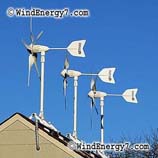
Home Wind Systems are Selling well in spite of a soft US economy. Helping homeowners to build and install wind/solar hybrid systems is a really fun way to make a living.  We have complete kits of matching components starting at $2450 and going up to whatever size project a customer needs.

wind turbine generator home roof mount rooftop kit

The best selling is the smaller rooftop mounted turbines that connect with a solar panel to give clean reliable power. The cycles of heavy wind season in winter, heavy solar season in summer go hand in hand with our hybrid wind/solar systems.

home turbine home wind turbine home turbines turbines for home turbines for homes turbines homes wind turbines for homes home made turbine turbines for the home wind turbine for home turbine for home home built turbine home built turbines home turbine power home made turbines turbines home use wind turbines home use home gas turbine home wind turbine generators turbine

You see, since the wind is stronger in the winter months, sun is stronger in the summer months, we designed a system that is attractively priced, that gives an even flow of energy year round.  Many interested in home wind power are exploring homegrown junkyard turbines to build yourself.  I think it’s great to check out the home grown turbine kits and plans, but they will look like what they are when finished.  They will not look like these kits that we sell.  For most people, a professionally designed high tech kit is the way to to.  It’s way simpler to assemble and put up and is simply more attractive at the home.  My starter kits put out far more reliably and will perform much better.  Small DIY Wind Turbine Generator Kits

See Small Wind Turbine Tax Credit

If you are interested in starting a wind project for your residence or acreage, contact us. To Buy a Wind Turbine or Become a Dealer, Please fill out our Contact Form. The system will automatically send you some additional info.

Spain is (U.S. Leader) in Wind Power Deployed

Sunday, December 14th, 2008

.
.
“The Spanish are coming. The Spanish are coming!”

Iberdrola SA, a Spanish utility is now the second largest producer of wind power in the United States. The company had revenue of $22.8 billion in 2007. (largest producer of wind power in US is Florida Power & Light). Iberdrola currently holds functioning facilities in Brazil, France, Greece, Italy, Mexico, Portugal, Spain, the United States and the United Kingdom, and is continuing to develop wind farms in Europe and Latin America

Recently in 2008, the spanish utility Iberdrola SA invested $1.4 billion to build out new wind power capacity in the U.S. The company invested $1.5 billion in 2007, according to a company statement. These investments represent 780 megawatts of new wind-power capacity in the U.S.

home turbine home wind turbine home turbines turbines for home turbines for homes turbines homes wind turbines for homes home made turbine turbines for the home wind turbine for home turbine for home home built turbine home built turbines home turbine power home made turbines turbines home use wind turbines home use home gas turbine home wind turbine generators turbine

In September, Iberdrola finalized a $4.5 billion takeover of Energy East (NYSE: EAS) for $4.5 billion, Iberdrola was required by the New York Public Service Commission to build up 100 megawatts of new wind power in New York state. Through this takeover, Iberdrola now owns New York State Electric & Gas Co. NYSEG has 1.7 million upstate customers.

The Spanish wind power industry is on a roll. The Government’s new target would see wind energy supplying 15 percent national electricity consumption, up from 6.5 percent today.

“To dismiss wind energy as an expensive, niche green luxury, as many do, is to ignore what has happened in Spain, the world’s number one wind market”
– Corin Millais, CEO of the European Wind Energy Association

Why Wait, Let’s Go

Currently, wind provides about 1% of US electricity. As we now watch a great opportunity be exploited by foreign investment, America’s might is focussed on bail-out economics and dirty coal/fossil fuel lobbyist control the puppet strings of our US government. Just like the only successfull automobile plants in US are foreign owned and run, now we watch a foreign company take leadership of our wnd power. It’s a disgrace..

Spain is (I think) the most successful with wind power as a percentage of their capacity. So, these guys really do know that the ROI is there, that’s why they aren’t waiting for something else to happen.

The cost of wind power is almost comparable to fossil fuels such as coal, at between 4.5 and 7.5 cents per kilowatt hour, according to FPL Energy, builder of the country’s largest wind farm in Horse Hollow, Texas. But building a wind farm costs more than a fossil-fuel plant – between $1.5m and $2m per megawatt of capacity compared with $800,000 for a natural-gas plant. Once constructed, though, wind plants have no fuel costs compared with coal and natural gas plants.

Whether putting a small system on your roof to run part of your home power, a 40′ tower to power your whole home, or a giant utility scale turbine. If there’s wind resources and you need electricity, the payback is proven. At WindEnergy7.com our sales have over doubled since the government approved the Small Wind System 30% tax credit. But, before that our sales were already brisk. I did not wait on any government assistance to put wind on my home because the payback was already clear.

Personally, since I put my money in wind power for my own home.. My utility announced a 45% increase in electricity cost.. AND, the government approved and announced the Small Wind System 30% tax credit. So my 10 year ROI has gone to about a 5 year ROI from those 2 developments. But, to me, I was happy with the 10 year payback because the systems are developed for a 30 year life before a rebuild. That means worst case I was set to have 20 years of free electricity, right into my retirement years.. I love that.

Anyway, back to Spain. One thing that I have seen is pictures of Spain’s mountain ranges simply polluted with too many towers. Although I am a proponent of wind power, I love the landscape and mountains and it is a shame to see an over use of windpower covering a mountain to the point it ruins the beauty. There should be limits to this. Also, wind power has taken many hits on adoption due to developers putting large Utility Wind towers way to close to homes. These giant wind turbines should never be close to homes, that is a mistake that sets back the progress by causing problems for homeowners. Utility Scale Wind power should be VERY rural IMO. Using wind close to a home should be a quiet unobtrusive small wind system, they are quiet and will not cause any backlash against wind power progress.

To Buy a Wind Turbine or Become a Dealer turbine@windenergy7.com.

University Of Illinois Wind Turbine Cancelled… The Economy.

Sunday, December 14th, 2008

A University Of Illinois plan has been cancelled. Wind Turbine Plan was cut by the administration at the University Of Illinois. The University of Illinois canceled plans to build wind turbines on campus because of the university’s “deteriorating fiscal condition.” Richard Herman, the University Chancellor notified GE and student leaders of the university’s decision to halt the project on Thursday. GE had a contract to build and deliver a 1.5-megawatt wind turbine to be erected on the South Farms. That contract, sent last week to the university, the university officials declined to sign.

home turbine home wind turbine home turbines turbines for home turbines for homes turbines homes wind turbines for homes home made turbine turbines for the home wind turbine for home turbine for home home built turbine home built turbines home turbine power home made turbines turbines home use wind turbines home use home gas turbine home wind turbine generators turbine

Given the “deteriorating fiscal condition” of the university – the state recently asked the university to hold 2.5 percent of its state appropriation in reserve – “we’ve got to spend money where there’s a rapid payback,” said Dick Warner, a professor in Department of Natural Resources and Environmental Sciences and director of the university’s new Office of Sustainability. The single turbine would have generated about 1 percent of the campus’s energy needs.

“We need to be looking for things that have immediate cost savings,” Warner said. With a return of investment at 7 years or so, a wind turbine represents paying 7 years of electricity up-front. What was a sound idea a few months ago, has turned into a large expenditure to dealy or avoid because of the softening economy. Originally the project called for installing three turbines The wind energy project was announced in 2005. Over the last three years wind turbines demand has pushed prices higher according to the director of engineering services at the university. The project was scaled down from three turbines to one, then the budget was cut down $5.7 million to $4.6 million.

Many University students that were ardent supporters of the wind turbines said they were disappointed, stunned to hear of the project’s demise. “It’s pretty awful. Everyone’s really shocked right now,” said Amanda Schield, president of Students for Environmental Concerns. Her student group rallied support in 2003 for a $2 per-semester fee to be used for clean energy projects on campus, like the turbines. About $300,000 was raised from the fees, then directed for use on the wind energy project. The university would have received a $2 million grant from the Illinois Clean Energy Foundation to help pay for the turbines.

This is really a sad thing when you consider how well that shools have done with wind power projects in Iowa, Illinois, Texas, and elsewhere. They should have adjusted to use WindEnergy7.com Reconditioned Turbines, Remanufactured Turbines, Used Wind Turbines like many other community and school wind projects. The ROI is better and the adjustment may have saved the project from being cut.

Eldora-New Providence School in Iowa wind turbine in 2002!

Iowa, Forest City School has Wind Turbine Too, since 1999!

Wray School District Wind Turbine in Colorado

Ballinger Texas School District Wind Power Project

School District Makes Profit from Wind Energy

School District in Illinois to purchase wind turbines?

To Buy a Wind Turbine or Become a Dealer turbine@windenergy7.com.

Home Wind Turbine, Rooftop Kits Selling at Brisk Pace

Saturday, December 6th, 2008

Despite the bad economy, our wind turbine kits are selling at a brisk pace. That’s because of the great investment that a home wind turbine represents. Many early adopters are already seeing their investment grow in value. A WindEnergy7 turbine owner reports…

“We put in our home wind turbines in the fall and started making power. Then, Congress passed the bailout bill this fall, it added a 30% tax credit for small-wind projects. So, our investment qualifies for a tax credit there. Additionally our electricity company announced electricity rate hikes of 15% for each of next three years. That’s about 50% alltogether. Electricity costs are rising sharply and insiders report that utilities are planning to make a run at us similar to what oil companies pulled in 2007-2008. We are glad we made the jump, it made sense months ago, and since then our payback has really accelerated for the investment.”

Anyone think electricty rates are not rising fast? Just look at all the rate hikes nationally are rolling forward at an quick pace. Read News on Electricity Rate Hikes.

home turbine home wind turbine home turbines turbines for home turbines for homes turbines homes wind turbines for homes home made turbine turbines for the home wind turbine for home turbine for home home built turbine home built turbines home turbine power home made turbines turbines home use wind turbines home use home gas turbine home wind turbine generators turbine

The industry experts are predicting home wind power to grow 40% next year, even in a down market. Our sales at WindEnergy7.com reflect that for sure and we have been signing up many who are becoming wind turbine dealers. U.S. firms control 98% of the small-wind market, in contrast to large-scale wind and solar, in which foreign manufacturers dominate. So, with regard to creating green jobs, small wind is the best way to get involved.

Since the tax credit and electricity rate increses, our phone has been ringing off the hook. We are so glad that our equipment is helping consumers. Sales into Michigan and Oklahoma are especially strong where three new dealers are stimulating the sales of out home wind turbine kits.

Homeowners build and install wind/solar hybrid systems with our kits starting at just under $3000 bucks and going up to whatever size project a customer needs.

wind turbine generator home roof mount rooftop kit

Our best selling kit is the smaller rooftop mounted turbines because they are affordable, upgradeable, and efficient. The kits can connect with a solar panel to give clean reliable power to any home. As long as you have a wind resource of zone 2 or better, the turbines will pay for themselves. Please check our wind maps for your area.

wind-energy wind turbine rooftop wind solar hybrid

Our wind/solar hybrid systems are ideal. You see, since the wind is stronger in the winter months, sun is stronger in the summer months, we designed a system that is attractively priced, that gives an even flow of energy year round.  Our kits put out far more reliably and will perform much better than other turbines.  Small DIY Wind Turbine Generator Kits

See Small Wind Turbine Tax Credit

To Buy a Wind Turbine or Become a Dealer turbine@windenergy7.com.